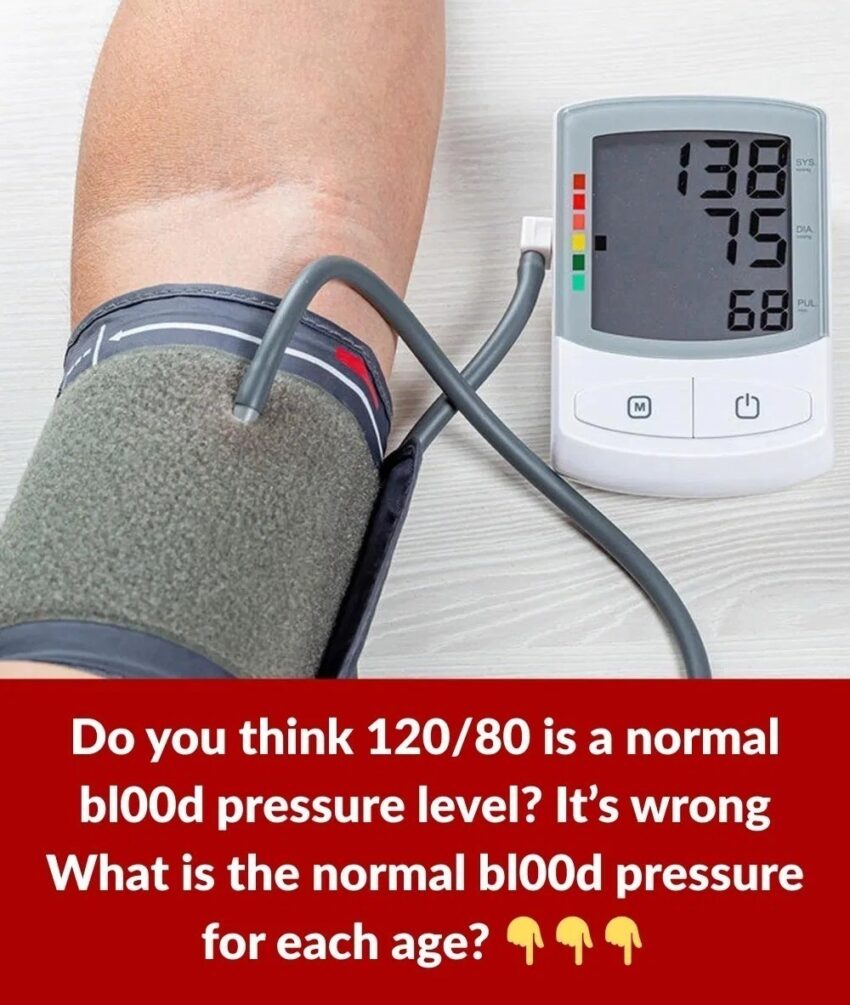
Blood pressure doesn’t have a single “perfect” number for each age, but there are general healthy ranges. Most guidelines (like those from the American Heart Association) focus more on overall risk than strict age-based targets.
🩺 General Normal Blood Pressure
- Normal: less than 120/80 mmHg
- Elevated: 120–129 / less than 80
- High (Hypertension): 130/80 or higher
📊 Typical Blood Pressure Ranges by Age
👶 Children (1–12 years)
- Varies by height, age, and gender
- Rough average: 90/60 to 110/70
🧑 Teenagers (13–19 years)
- Around 90/60 to 120/80
🧑 Adults (20–39 years)
- Ideal: <120/80
- Average: ~110–125 / 70–80
🧑🦱 Adults (40–59 years)
- Ideal: still <120/80
- Many fall in: 115–130 / 70–85
👴 Older Adults (60+ years)
- Target: <130/80 (in most healthy individuals)
- Slightly higher may be acceptable depending on health
⚠️ Important Notes
- Blood pressure naturally increases slightly with age, but “normal” is still considered below 120/80 if possible.
- Consistently high readings may indicate Hypertension, which raises the risk of heart disease and stroke.
- Very low blood pressure (e.g., below 90/60) can also cause symptoms like dizziness.
🧠 Simple Rule to Remember
- Under 120/80 → Ideal
- 130/80 or higher → Needs attention
If you want, tell me your age and recent readings—I can help you interpret whether they’re normal or something to watch closely.