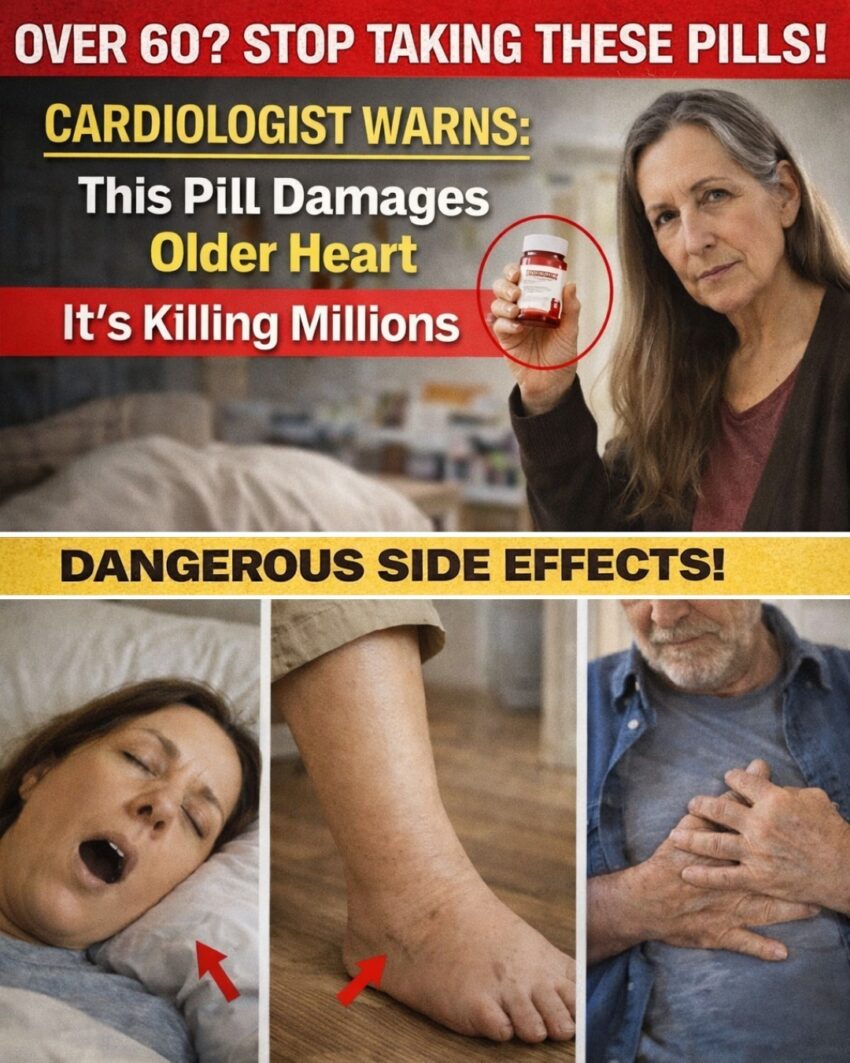
That headline is almost certainly clickbait. There is no single “mystery pill” that universally damages the hearts of older adults. What cardiologists actually warn about is specific categories of medications that can be risky depending on dose, age, and existing conditions.
Let’s break it down realistically.
🫀 What doctors are usually referring to
A Heart Disease risk in older adults is often influenced by medications that affect:
- Blood pressure
- Heart rhythm
- Fluid balance
- Kidney function
⚠️ Common medication groups that can affect the heart
1. Painkillers (NSAIDs)
Examples: ibuprofen, diclofenac
- Can raise blood pressure
- May increase risk of heart attack or fluid retention in long-term use
- Especially risky in older adults with existing heart or kidney issues
2. Certain decongestants
- Can increase heart rate and blood pressure
- May worsen palpitations or arrhythmias
3. Some diabetes medications (context-dependent)
- Modern drugs are usually heart-safe, but older ones or improper use can cause issues indirectly (low blood sugar, fluid shifts)
4. Diuretics (water pills)
- Important for heart failure, but if mismanaged:
- Can cause dehydration
- Electrolyte imbalance (potassium/sodium) affecting heart rhythm
5. Certain sleep or anxiety medications
- May lower breathing drive or blood pressure in sensitive older adults
- Risk increases when combined with alcohol or other sedatives
🚨 Important reality check
- No single pill is “silently destroying hearts” in general use
- Risk depends on:
- Dose
- Duration
- Age
- Other diseases (kidney, hypertension, diabetes)
- Drug combinations
🧠 What cardiologists actually emphasize
Doctors focus more on:
- Hypertension control
- Cholesterol management
- Diabetes control
- Avoiding unnecessary long-term NSAID use
- Regular medication reviews in seniors
✔️ Bottom line
- The headline is exaggerated
- Some medications can increase heart risk in specific situations
- The real issue is not the pill itself, but how and when it’s used
If you want, I can tell you the top 5 truly risky medication combinations for older adults that doctors actually watch for (this is much more useful than viral warnings).