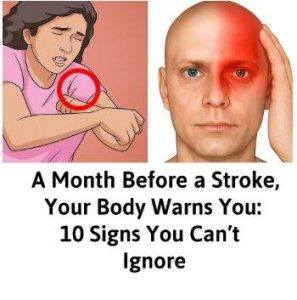
The idea that your body gives a clear, predictable “1 month warning” before a stroke isn’t quite accurate. Strokes often happen suddenly. But your body can show warning signs and risk signals in the days, weeks, or even months beforehand—especially in the form of mini-strokes or underlying conditions.
Here’s what actually matters.
🚨 The most important early warning: mini-strokes
A Transient Ischemic Attack is the closest thing to a true early warning.
- Stroke-like symptoms that go away within minutes or hours
- Often ignored because they resolve quickly
- Major red flag: risk of a full stroke is much higher soon after
⚠️ 10 warning signs you should never ignore
1. Sudden numbness or weakness
Especially on one side of the body (face, arm, or leg)
2. Trouble speaking or understanding
Slurred speech or confusion
3. Vision problems
Blurred, double, or loss of vision in one or both eyes
4. Severe headaches
A sudden, intense headache (can indicate a Hemorrhagic Stroke)
5. Dizziness or loss of balance
Trouble walking or coordination issues
6. Short episodes of symptoms that disappear
Classic sign of a TIA
7. High blood pressure
Hypertension is the #1 risk factor for stroke
8. Irregular heartbeat
Conditions like **Atrial Fibrillation increase clot risk
9. Sudden fatigue or confusion
Especially in older adults—can be subtle
10. Nausea or difficulty swallowing
Less common, but possible depending on the brain area affected
⏱️ When it’s happening: remember FAST
Use the FAST rule for immediate action:
- Face drooping
- Arm weakness
- Speech difficulty
- Time to get emergency help
⚠️ Important reality check
- These signs don’t reliably appear “a month before” for everyone
- Some people have no warning at all
- Waiting for multiple symptoms can be dangerous
✔️ What actually reduces risk
- Control blood pressure
- Manage diabetes and cholesterol
- Quit smoking
- Stay active and maintain a healthy weight
- Follow medical advice if you have heart issues
Bottom line
There’s no guaranteed countdown to a stroke—but your body can send signals. The biggest mistake is ignoring short, temporary symptoms or brushing off risk factors.
If you want, I can help you assess your personal stroke risk based on your lifestyle and health history and suggest practical steps to lower it.