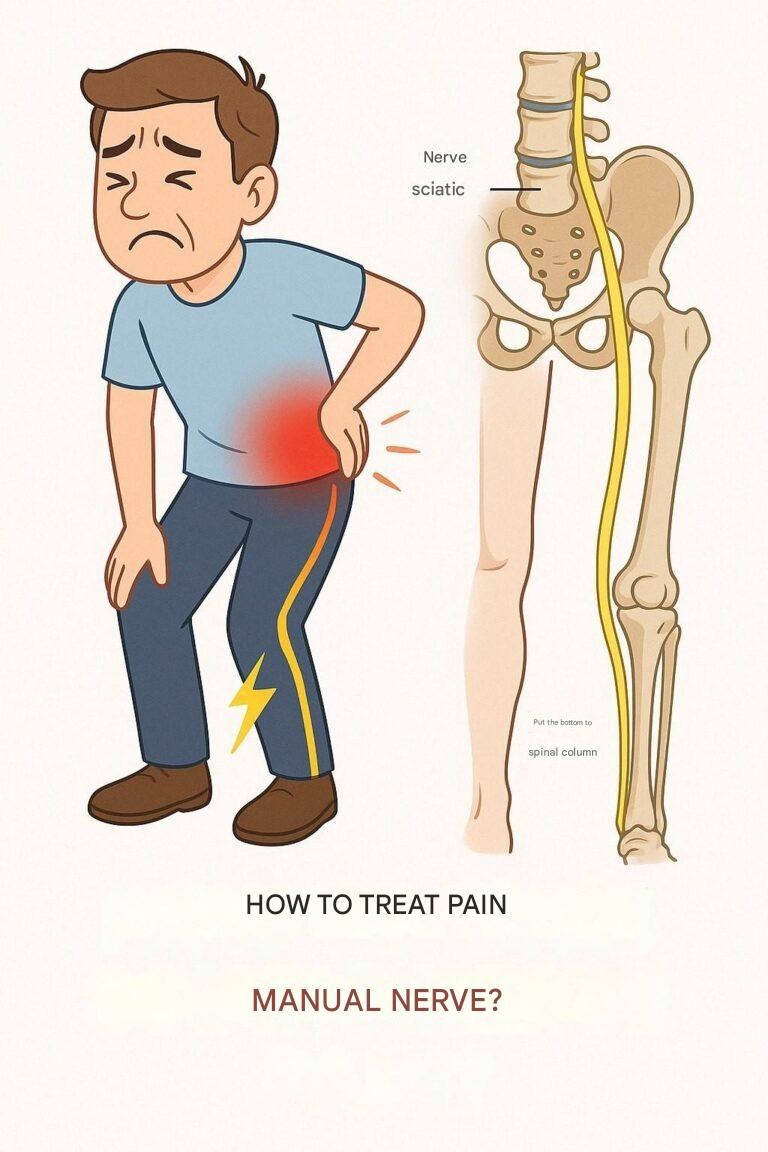
First, a reality check: sciatica isn’t something you “exercise away instantly.” The pain comes from irritation of the sciatic nerve, usually due to a disc issue or tight muscles. But certain gentle movements can reduce pressure and help symptoms over time.
Here are 3 widely used, evidence-informed exercises that often help:
🧘♂️ 1. Sciatic nerve glide (nerve flossing)
Sciatic Nerve Glide
How to do it:
- Sit on a chair with good posture
- Extend one leg slowly while pointing toes up
- Then slowly bend the knee back
- Move gently—no forcing or pain spikes
Why it helps:
Improves nerve mobility and reduces irritation without stretching it aggressively.
🧍♂️ 2. Knee-to-chest stretch
Knee to Chest Stretch
How to do it:
- Lie on your back
- Pull one knee toward your chest
- Hold 20–30 seconds
- Switch sides, repeat 2–3 times
Why it helps:
Relieves pressure in the lower spine and relaxes glute muscles that can compress the nerve.
🧘♀️ 3. Piriformis stretch (figure-4 stretch)
Piriformis Stretch
How to do it:
- Lie on your back
- Cross one ankle over opposite knee (figure-4 shape)
- Pull the bottom leg toward your chest
- Hold 20–30 seconds
Why it helps:
Targets the piriformis muscle, which can irritate the sciatic nerve when tight.
⚠️ Important safety notes
Stop or avoid these exercises if:
- Pain shoots sharply down the leg during movement
- You develop numbness or weakness
- Pain is getting worse instead of improving
🧠 Key truth about sciatica
- Exercise helps reduce pressure and improve mobility
- But it does NOT fix severe disc problems alone
- Persistent or worsening symptoms may need medical evaluation
🚨 Get checked urgently if:
- Loss of bladder/bowel control
- Severe leg weakness
- Numbness in the groin area
If you want, I can build you a 7-day sciatica recovery routine (morning + night plan) based on whether your pain is mild, moderate, or severe.