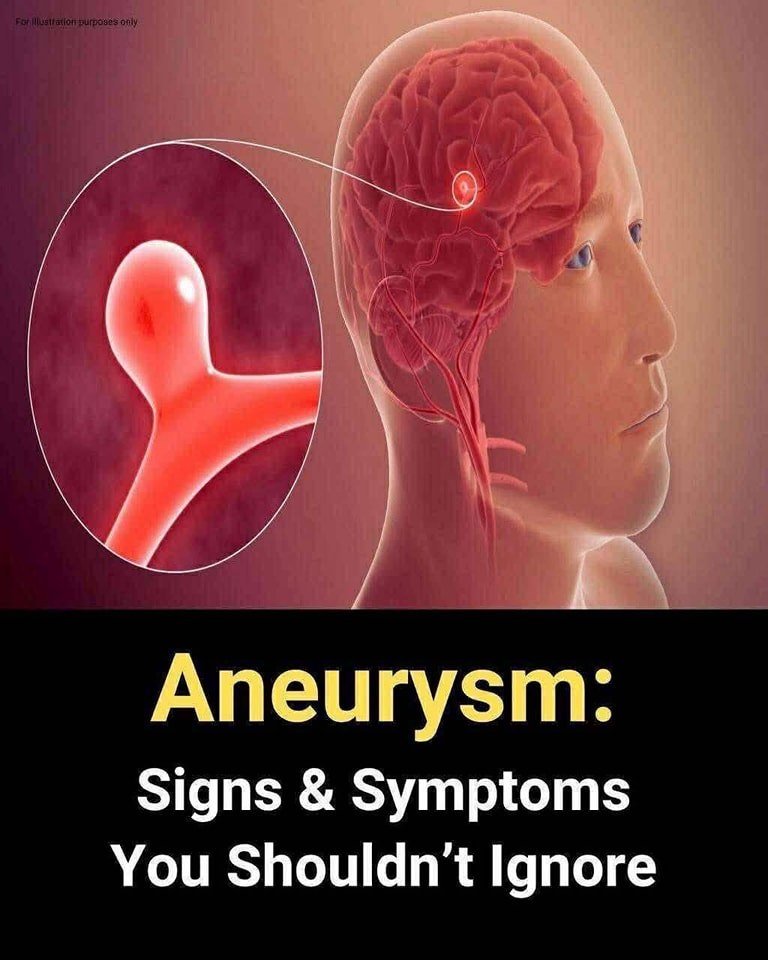
An Aneurysm is dangerous because it can grow silently and then rupture, causing life-threatening bleeding. The tricky part is that many aneurysms cause no symptoms until they become large or rupture.
Here are the key warning signs doctors say you should never ignore.
🚨 Possible warning signs of an aneurysm
🧠 1. Sudden, severe headache (“worst headache of your life”)
May suggest a brain aneurysm rupture or leak.
👁️ 2. Vision problems
- Blurred vision
- Double vision
- Drooping eyelid
🧠 3. Neck pain or stiffness
Especially if sudden and severe.
⚡ 4. Sudden weakness or numbness
Often on one side of the body.
🗣️ 5. Difficulty speaking or confusion
Can indicate brain involvement or bleeding.
💥 Signs of rupture (medical emergency)
If an aneurysm bursts, symptoms are dramatic and require immediate emergency care:
- Sudden, explosive headache
- Loss of consciousness
- Seizure
- Nausea/vomiting
- Rapid collapse
This is especially associated with a brain aneurysm causing subarachnoid hemorrhage.
❤️ Other types of aneurysms (important)
🫀 Abdominal aortic aneurysm
May cause:
- Deep, constant abdominal pain
- Back pain
- Pulsating feeling in abdomen
🫁 Thoracic aneurysm
May cause:
- Chest pain
- Shortness of breath
- Hoarseness
⚠️ Risk factors to take seriously
- High blood pressure
- Smoking
- Family history of aneurysm
- Age (risk increases with age)
- Certain genetic conditions
🧠 Key takeaway
- Most aneurysms are silent until dangerous
- Sudden severe headache or collapse is a medical emergency
- Risk factors matter more than early vague symptoms
🚨 When to seek help immediately
Call emergency services if someone has:
- Sudden “worst headache”
- Fainting or collapse
- Sudden neurological symptoms (speech, vision, weakness)
If you want, I can explain how aneurysms are detected early and who should get screened, which is the most important prevention step.