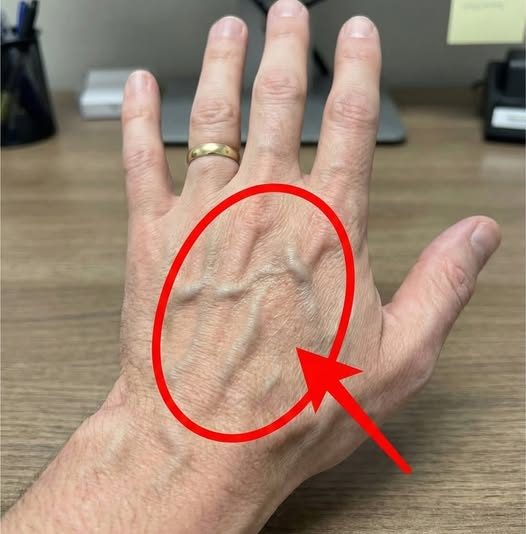
That line is usually clickbait. “Visible veins” by itself doesn’t mean anything specific or diagnostic.
🩸 What visible veins actually mean
In most cases, visible veins simply reflect normal physical and environmental factors, such as:
- Low body fat (less fat covering the veins)
- Genetics (some people naturally have more visible veins)
- Heat or exercise (veins expand to regulate temperature or increase blood flow)
- Skin tone and thin skin
- Hydration and temporary blood flow changes
💪 When it’s related to fitness
In people who exercise regularly, visible veins (called vascularity) often mean:
- Lower subcutaneous fat
- Better muscle tone
- Increased blood flow during activity
This is not a medical problem—it’s usually just body composition.
⚠️ When it might signal a health issue
Visible veins alone are not dangerous, but pay attention if you also have:
- Pain, heaviness, or aching in the legs
- Swelling in one or both legs
- Twisted, bulging veins
These could suggest Varicose Veins or circulation issues.
🧠 Key takeaway
- Visible veins ≠ illness
- Most of the time = normal anatomy or fitness level
- Only concerning when paired with symptoms like pain or swelling
If you want, I can explain when visible veins are actually a sign of good fitness vs when they indicate poor circulation, with simple visual clues.