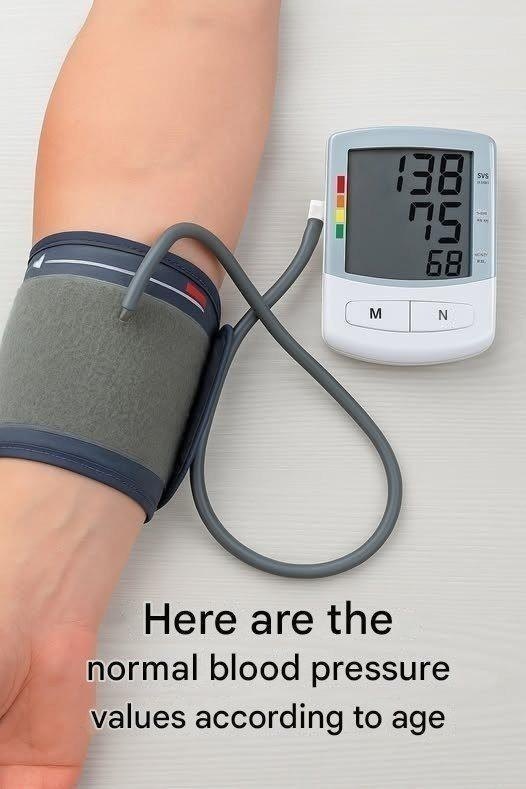
There isn’t a truly different “normal blood pressure for each age” in modern medical guidelines. Instead, most health organizations use one standard normal range for adults, with only small differences for children and older adults in interpretation.
🩺 Standard blood pressure categories (adults)
According to major guidelines:
✔️ Normal blood pressure
- Hypertension context: Normal range
- Systolic: less than 120 mmHg
- Diastolic: less than 80 mmHg
So: <120 / <80 mmHg
⚠️ Elevated (pre-hypertension)
- Systolic: 120–129
- Diastolic: less than 80
This is a warning stage—not yet hypertension, but risk is increasing.
🚨 High blood pressure (Hypertension Stage 1)
- 130–139 / 80–89
🚨 High blood pressure (Stage 2)
- 140+ / 90+
👶 Blood pressure in children (age-based)
For children and teens, “normal” depends on:
- Age
- Height
- Sex
So doctors use percentile charts rather than fixed numbers.
👴 What about older adults?
Older adults may naturally have slightly higher systolic pressure due to stiffening arteries, but:
- Normal target is still generally <120/80 when healthy
- Doctors sometimes accept slightly higher targets depending on health conditions (like dizziness risk or medication effects)
🧠 Key takeaway
- There is no safe “normal increase” just because of age
- Ideal BP for most adults stays around 120/80 or lower
- Treatment decisions depend on overall health risk, not age alone
If you want, I can show you a simple chart comparing low, normal, and dangerous blood pressure levels—and what symptoms to watch for at each stage.