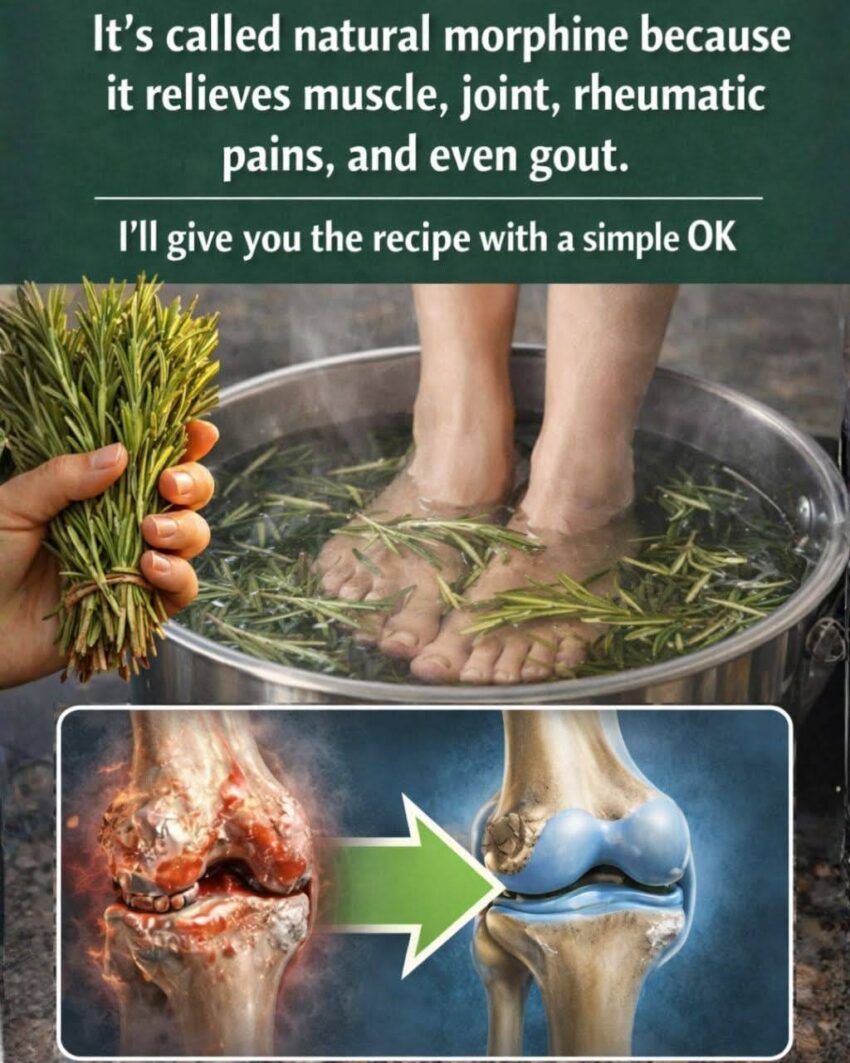
That headline is partly grounded in real research, but it’s often exaggerated in social media posts.
🌿 What is rosemary actually?
Rosmarinus officinalis is an aromatic herb used in cooking and traditional medicine. It contains compounds like rosmarinic acid and essential oils that have biological activity.
🧪 What science actually supports
✔️ Possible benefits (modest, not miraculous)
Research suggests rosemary may:
- Have mild anti-inflammatory effects
- Act as an antioxidant (helps reduce oxidative stress)
- Provide mild pain-relief properties when used topically (like diluted oil)
- Support digestion in some traditional uses
- Potentially improve mood or alertness through aroma (inhalation studies)
💆 Pain relief claims — what’s true?
- Rosemary oil applied to the skin (diluted) may slightly help with muscle or joint discomfort
- Aromatherapy may reduce perception of pain or stress in some people
- But it is not a substitute for real pain medication for conditions like arthritis or nerve pain
⚠️ What it does NOT do
Rosemary does not:
- Cure chronic disease
- Replace medical treatment for inflammation disorders
- Provide strong, consistent pain relief like prescribed medication
- “Heal” organs or reverse serious conditions
🚨 Safety considerations
- Essential oil must be diluted before skin use (can irritate skin if not)
- Not recommended in high doses during pregnancy without medical advice
- Very high intake is not proven safe or beneficial
🧠 Bottom line
- Rosemary is a useful herbal support, not a powerful medical treatment
- It may offer mild relief and wellness benefits
- Most “miracle herb” claims online are overstated
If you want, I can show you how rosemary actually compares to other herbs (like turmeric or ginger) for pain and inflammation based on real evidence.