That statement is partly true in some cases, but oversimplified and a bit alarmist.
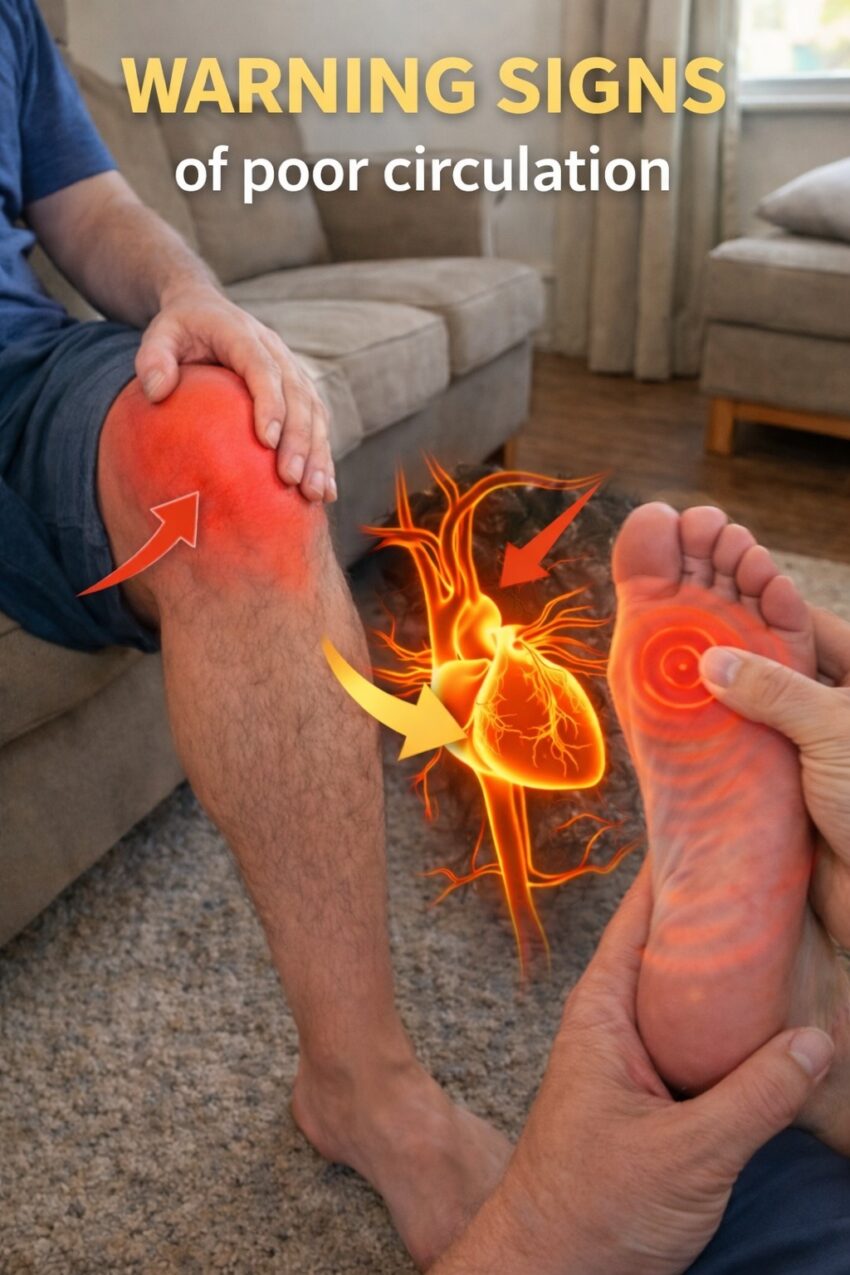
Yes—tingling, cold toes, and calf aching can be linked to circulation problems, but they are not specific enough to assume “poor circulation is getting worse” on their own.
🦶 What those symptoms can mean
1. Tingling or “pins and needles”
Can come from:
- Nerve compression (very common)
- Diabetes-related nerve irritation
- Vitamin deficiencies (especially B12)
- Sometimes circulation issues
2. Cold or icy toes
May be related to:
- Normal temperature sensitivity
- Anxiety or stress response
- Reduced blood flow in some cases
- Peripheral Artery Disease (important but not the most common cause)
3. Calf aching
Can be caused by:
- Muscle fatigue or overuse
- Dehydration or electrolyte imbalance
- Nerve issues (like sciatica)
- Circulation problems, especially if pain appears while walking and improves with rest
⚠️ When circulation is more likely involved
Doctors worry more when symptoms include:
- Pain in calves when walking that stops with rest (claudication)
- One foot colder than the other
- Slow-healing sores on feet
- Weak or absent pulses in feet
- Skin color changes (pale, bluish)
🚨 Key reality check
- These symptoms do NOT automatically mean worsening circulation
- Many cases are due to nerves, posture, or lifestyle factors
- True vascular disease usually shows a pattern over time + clear walking-related pain
🧠 Bottom line
- The statement is partly right but too absolute
- Symptoms can be early clues—but also very common, harmless issues
- Context (age, diabetes, smoking, walking pain pattern) matters much more than the symptoms alone
✔️ When to get checked
See a doctor if you notice:
- Progressive worsening symptoms
- Pain in legs while walking
- Numbness that doesn’t go away
- Foot wounds or color changes
If you want, I can help you quickly differentiate nerve vs circulation vs muscle causes using a simple symptom checklist so you can interpret these signs more accurately.